By Xuxzuxx Home · July 15, 2025 · 6 min read
Switching to LED lighting is one of the easiest ways to reduce your energy bill and your environmental footprint. LED bulbs use up to 80 percent less energy than incandescent bulbs and last 25 times longer. Here is how to make the switch effectively.
Understand lumens, not watts
When shopping for LED lighting, look at lumens, not watts. Watts measure energy consumption; lumens measure light output. A 60-watt incandescent bulb produces about 800 lumens. An LED bulb that produces the same 800 lumens uses only 9 to 12 watts.
For general room lighting, aim for 10 to 20 lumens per square foot. For task lighting like desk lamps and reading lights, aim for 30 to 50 lumens per square foot.
Choose the right color temperature
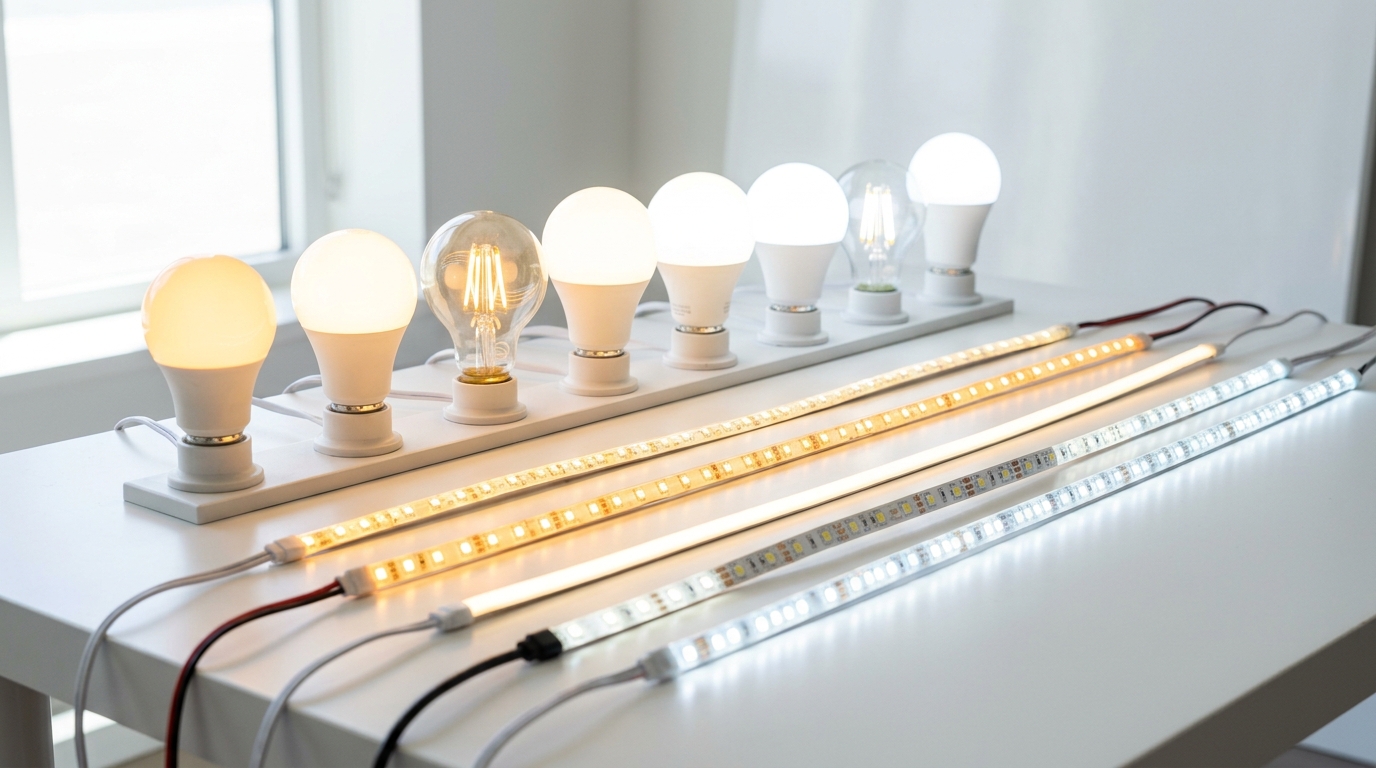
LED color temperature is measured in Kelvin (K). Lower numbers produce warm, yellowish light; higher numbers produce cool, bluish light.
- 2700K to 3000K — Warm white. Ideal for living rooms, bedrooms, and dining areas. Creates a cozy, relaxing atmosphere.
- 3500K to 4000K — Natural white. Good for kitchens, bathrooms, and hallways. Provides clear, balanced illumination.
- 5000K to 6500K — Cool white. Best for offices, garages, and task lighting. Promotes alertness and focus.
Use LED diffusers for even light
Bare LED bulbs can create harsh shadows and glare. A frosted LED diffuser spreads light evenly across a surface, reducing hotspots and creating a softer, more natural appearance. Look for diffusers with 120-degree wide-angle distribution for maximum coverage.
Optical-grade polycarbonate diffusers maintain up to 92 percent light transmission while reducing glare. This means you get the full brightness of your LED with none of the harshness.
Smart LED strips for ambient lighting
RGB LED strips are one of the most versatile LED products available. Place them under cabinets, behind TVs, along baseboards, or under furniture for instant ambient lighting. Most smart strips work with Alexa and Google Home, letting you control color and brightness with your voice.
Look for strips with 16 million colors and adjustable white temperature. This gives you the flexibility to create warm ambient light for movie night and bright task light for cooking, all from the same strip.
LED night lights for safety
LED night lights use less than 1 watt of power and last for years. Motion-activated models turn on only when needed, saving even more energy. Place them in hallways, bathrooms, and stairways to prevent trips and falls without keeping anyone awake.
For children, LED galaxy projectors and 3D night lights provide comfort and entertainment while using minimal power. Look for USB-powered models that can run from a power bank for portable use.
Calculate your savings
A typical household has 40 to 60 light bulbs. Replacing all of them with LEDs can save $200 to $400 per year on electricity costs. The bulbs pay for themselves within 6 to 12 months and continue saving money for years.
LEDs also generate very little heat, which reduces your cooling costs in summer. And because they last 25,000 to 50,000 hours, you will rarely need to replace them.
Make the switch
Start with the lights you use most: kitchen, living room, and office. Replace incandescent and CFL bulbs with LED equivalents. Add smart LED strips for ambient lighting. Install LED night lights for safety. The investment is small, and the savings start immediately.
Your energy bill will drop, your rooms will look better, and you will not need to change a bulb for years.